A script tells you what is said. It says almost nothing about what is seen - and the gap between those two is where most amateur video falls apart. You arrive with the words ready, then spend forty minutes deciding where to stand, discover halfway through that you needed a close-up you did not shoot, and end up cutting around the hole.
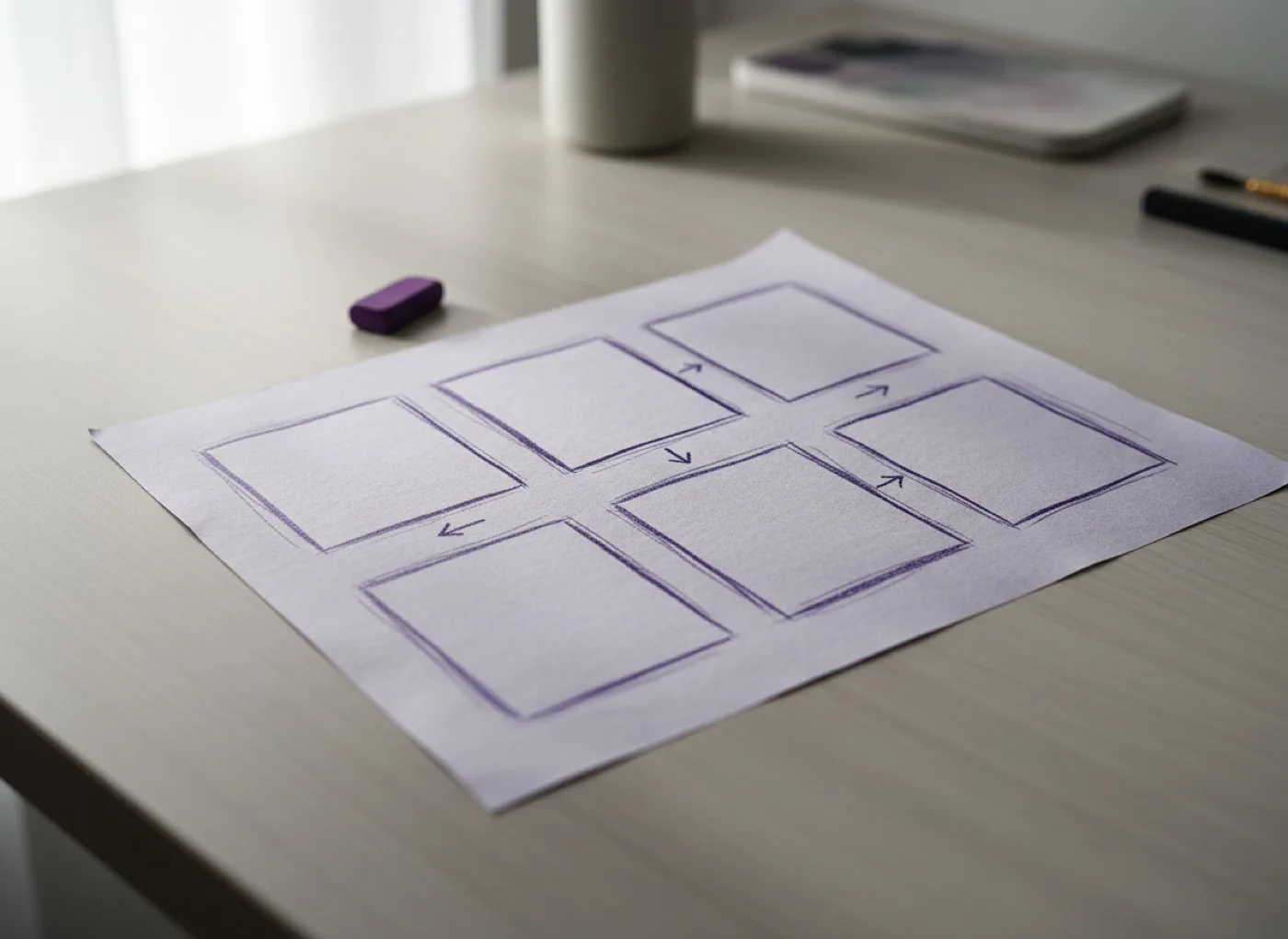
A storyboard closes that gap. Not the drawn kind - the practical kind: a numbered list of shots, each with the framing, the angle, what happens, and what is heard. Read it once and you know how many setups you need and in what order to shoot them.
It is also the difference between filming for an hour and filming for three. Decisions made at a table are much cheaper than decisions made with a camera in your hand.
This prompt converts a script or even a rough idea into that list. Run it in the AIMIKA chat in Text mode.
You get a numbered list of shots, each with the framing, the angle, the action and the sound. Read it once and you know how many setups you need and in what order to shoot them - which is the difference between filming for an hour and filming for three.
This is worth doing even for a two-minute video, and especially if someone else is holding the camera. A storyboard replaces a long conversation about what you are both imagining, and it catches the missing close-up while it is still free to fix, rather than in the edit when it is not.